REESE THE BARBER
Interviewed by Ian F Svenonius

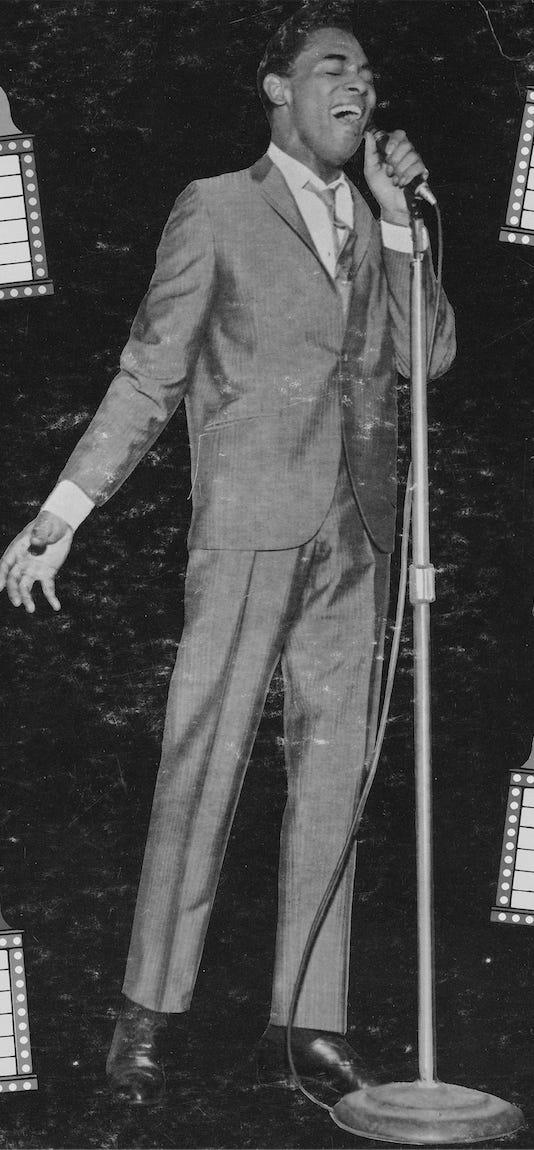
Joe Reese worked as a hairstylist in DC for over 50 years. Employed for twelve years at the Dunbar Hotel on 15th and U Street NW, he styled most of the entertainers who passed through while booked at the Howard Theater, including Jimmy Reed, Johnny Taylor, Diana Ross, James Brown, Sam Cooke, Nat King Cole, et al. Built in 1910 to be a black music venue, The Howard Theater was part of the so-called “chitlin’ circuit” which included the Ritz Theater ( Jacksonville), the Apollo (New York), the Paramount (Brooklyn), the Fox (Detroit), the Royal (Baltimore), and the Regal (Chicago). Reese started his own barber shop on the corner of 14th and U Street in the ‘60’s but retained many of the same clients who had come to to rely on him at the Dunbar.1
JR: Well let me run this past you: You see, my shop, I used to be in the Dunbar Hotel which was all black hotel —back during discrimination, way back in the 50's— then I came out of that, after 12 years, then I moved to 14th St, where I was right in the heart of all the drug thing, the prostitution …
IS: Yeah, 14th St. used to be synonymous with prostitution …
JR: It was all over the news, all over the world … at that time I was still doing alot of the people of who used to play the Howard Theater 'cos at the Dunbar I used to do most all of the people from time to time who would play at the Howard, and I was right there in the middle of the riot when the first molotov cocktail was thrown across the street from my shop at the old Peoples Drugstore at that time (epicenter of the '68 DC riots).
IFS: Wait, where was your shop?
JR: The 2100 block of 14th St, so I was right in the midst of it … 14th and U. Right across from the Reeves Center.
IFS: So where was the Dunbar?
JR: 15th and U. So I was there for 12 years.
IFS: So what was the scene at the Dunbar?
JR: Well, the Dunbar was like the largest black hotel in DC or almost in all of the south, the next one was in Florida … you know this is where the musicians travelled; they'd be coming out of Chicago, they'd come out of NY, Connecticut, wherever . . . they'd just be sometime on the road, doin' one night stands, or whatever, they'd travel like from north to south, and this would be like a stopover place, a lot of them would be going into the Howard Theater, and places like such or maybe they'd be going over to Florida, they had a big theater there, or they'd be going— depends on where their booking was— maybe Texas or California or Atlanta or …
IFS: It was a big circuit. Musicians, constantly touring …
JR: Yeah, and this was like a big stopover and a lot of them would stay at the Dunbar and we had a shop there and we rendered the type of service that they needed, and service that they wanted, and they liked our service because we were advanced in the chemical field, so a lot of times they knew they couldn't get what they want further south for their hair thing so they'd stop over here and get what they want. Some of them would substitute down there but a lot of them weren't pleased, cos we did the hairstyles better than some of the hairstylists in NY. So we would end up doing the hair both going and coming.
IFS: So what were some of the techniques the people were looking for?
JR: Well we were in the advanced chemical forms, the finger waves …
IFS: What's a finger wave?
JR: The finger wave is a form of styling the hair where you rearrange the hair in so many different ways and then later on they —or at least I did— started to mix it up with rollers and hot curls and all that stuff and they really got a thing going then 'cos people didn't realize the hair could be arranged so many different ways but with the curling irons it just opened up a new door; a new world.
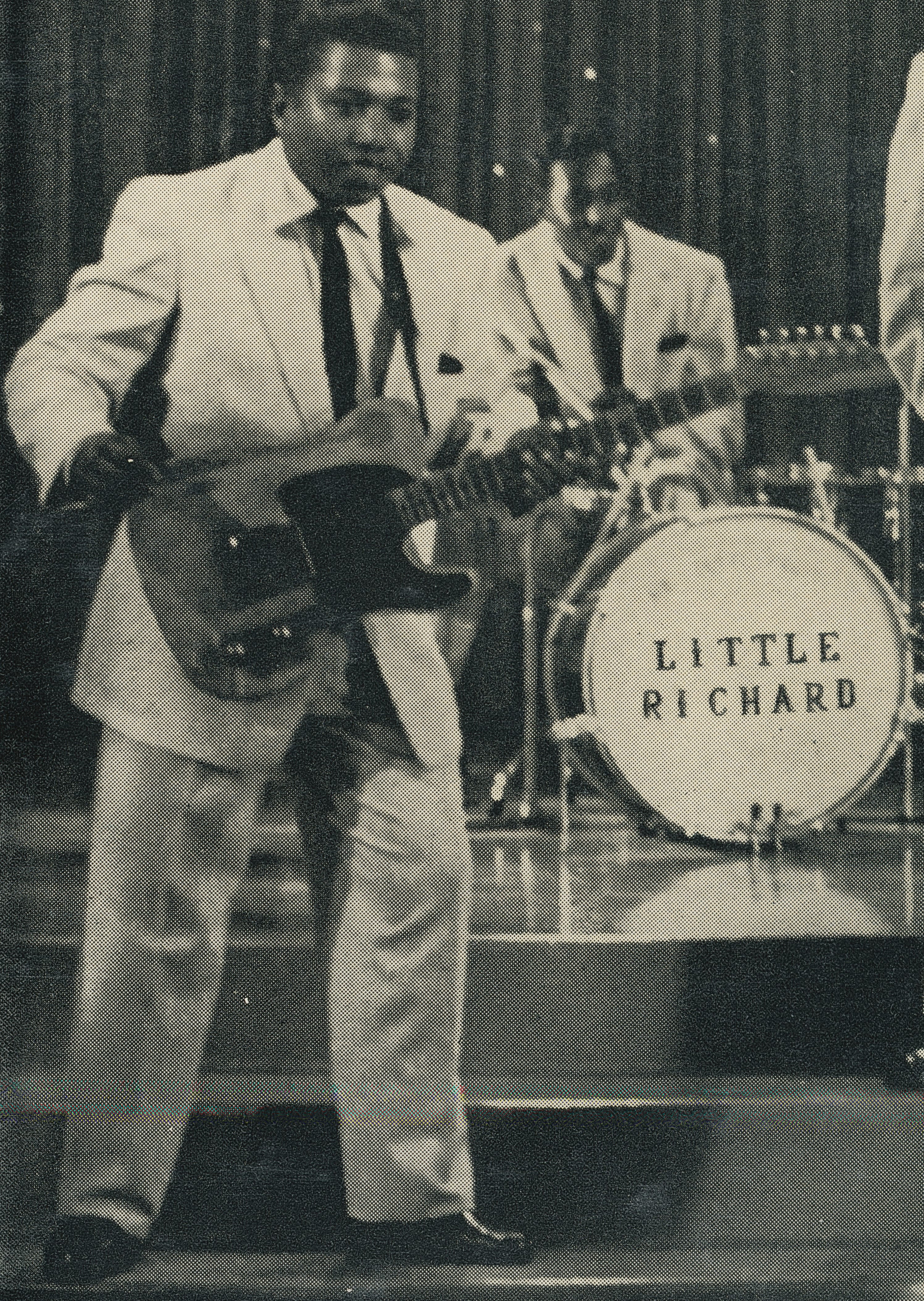
IFS: So Little Richard's hair or James Brown's hair, those big curly pompodours, was that common? Were people wearing those on the street?
JR: Oh yeah, people on the street, musicians, football players, basketball players, the people who had the money. It wasn't that expensive but even so a lot of people couldn't afford it. Maybe some people were doing construction, but they had a source of money coming in 'cos it was something you needed to get done every so often … there was a lot of maintainence and upkeep. It wasn't something you could get done once and last for life. Some people would get it every week or every two weeks depending on the person. So it became a way of life . . . another way of keeping your attire up to date. If you had your shoes shined and your new suit on and your new pants on and shirt and you wanted to impress the girl your hair was a part of it too. You weren't completely dressed unless you had your hair up to par, whether it was cut, styled . . . you know, that's the way it was in those days.
IFS: So when did these chemical processes start?
JR: Well they started in the forties, but in the 50's it got more advanced and we'd have these seminars 'cos they'd be making new and better chemicals and stepping it up to another level and they just kept on stepping it up, and it became a basic thing throughout the US where people would groom and keep up their personal appearance; later on they tried to stop it in DC saying we didn't have the license to do such . . .

IFS: Why was that?
JR: The schools just lagged behind and but later they put it in the curriculum of all the schools, to teach these advanced hairstyles cos it was what the people wanted . . . cos people were into hot curl, press and curl, but they didn't know about it, they didn't think that would work in the black people's hair but it was just an advancement, just like in music or anything else . . .
IFS: So what kind of chemicals are you talking about?
JR: Well there were all kinds of chemicals good, bad and in between. Some of the companies were selling the worst products possible. These home kits you buy from a drugstore; that's like putting a chef vs. someone who's never cooked. You don't get the same result.
IFS: Wasn't Florida Ave/U St. called Boundary St and served as some kind of color line?
JR: Well not really, it was the Boundary St between downtown and uptown really. You had predominantly black population in NE and SE . . . but NW was more mixed.
IFS: Wasn't that some segregation line though?
JR: Well you had segregation here and there was some sections blacks didn't live . . . except as butlers or maids … when I first moved here in '52 it was just changing. It wasn't as bad as the Jim Crow in the deep south but it had its stigma of segregation.
IFS: Where are you from originally?
JR: Originally a little town in Georgia called Sparta but I was raised in Atlanta.
IFS: Is Sparta near Rome, Georgia?
JR: Yeah not too far. Then I went into the army in '50 and then moved here.
IFS: So these artists would all stay at the Dunbar. Who are some of the artists whose hair you styled?
JR: Well we did advanced styling on people like Nat King Cole, James Brown, James Brown's Band, Bobby Bland, most of the bandleaders and members of the bands were wearing the so called "finger wave" . . . I could just keep naming people 'cos just about everyone was into that particular style or "bag" in the '50's and all the way up into the '60's. Up until the riot and then some of the styles began to change.
But even then, the finger wave had kind of faded out somewhat even though now it’s still "in." But hair runs like numbers; you never run out of styles, you just keep adding. Now short's in style, long's in style, perm's in style, straight's in style, wig's in style, braid's in style . . . so you name it; the young people have a tendency, they doing their thing, and everyone thinks they created something new, but mostly things have been here before. I've seen old books, some old styles from way back in the 18th century that are right back in style now. But they don't realize, the young people, they think they're the original ones, that they're the ones with all the brains.
IFS: So there were a lot of artists around here . . .
JR: Yeah a host of bands and I knew most of by name. Van McCoy,2 Eddie Floyd3 … Bobby Parker4 was a very good artist; a guitar player. TNT Tribble5; he was a drummer. Well known. He was heavy in DC. He played mostly at cabarets. He had a son who was a drummer. Played with Ike and Tina; they were clientele of the shop. So many people . . .

IFS: Billy Stewart.6
JR: Billy Stewart. I knew his brother, John Stewart, he was a hell of an artist. Anybody put out a record, you'd see him on stage the next day and hear him do it and he'd sound just like the artist! Bo Diddley used to come into the shop … I talked to him a number of times.
IFS: So all these musicians were staying at the Dunbar and then playing the Howard Theater …
JR: Well some of them but a lot of them couldn't afford it. The rate wasn't that bad but some of them couldn't even afford that. So they had what you call a lot of rooming houses. 5/6 dollars a night. And sometimes people would just give them a room for free, just 'cos they were musicians and just to say that they stayed there or that they knew them. And some of them would chip in, get one room, and four or five would stay in one room. They couldn't afford it 'cos they were getting paid one night at a time, which wasn't much. By the time they buy a couple drinks and for the girlfriend, that money was spoken for. And by the time they got the personal hygiene, the hair, the instruments that they needed, they were broke– they didn't have no money!
So I had to help quite a few … a lot of times they would get left, 'cos they had a strict rule; when there were a number of people in the band, they would tell you what time they were leaving; it was up to you to be there … and if you weren't there, you went out on the town or whatever, you would get left. 'Cos they got to the point they had to have a bus cos a lot of them were doing one night stands, staying up all night and they'd get on the highway the next day trying to drive and they were having a lot of accidents; killing themselves.
IFS: James Brown's bus crashed in Hagerstown, Md.
JR: Yeah, I don't know the details about that. Billy Stewart was in quite a few accidents before he was killed. They would play all night and party after and the next day they had to be in some place and get on the highway and just start driving … they didn't have a designated driver and sometimes the driver had been partying all night. So they changed the rule. Whoever was the designated driver couldn't party. So that helped. But sometimes the driver would cheat a bit. There were quite a few freak accidents at the time.
IFS: Seems like there were so many groups and labels.
JR: So many groups and labels. We had clubs all over DC. Even the white clubs and cabarets wanted that type of music and would hire them to play. A lot of the musicians didn't have any rights to the music on the records; they gave songs away cos they didn't have the knowledge of how to protect themselves and get their names on the records. They were taken advantage of. They didn't seek out legal advice to protect themselves.
Things began to change after the riots and they made a whole complete revolution for music and they went into . . . what they call "disco". . . and the disco thing they found out they could get one person to play, give him a few dollars —they didn't need a band! So what it did was it eliminated most bands.
So maybe some people, like myself, didn't like that, if they had an affair or whatever they wanted the real music, the live band; there was still hot bands who had cut a hit record, therefore some of the bands were able to survive but the smaller bands got hurt 'cos there just wasn't no demand for them. In the clubs and most places you'd go in, now they had disco.
I even stopped going to clubs 'cos disco just wasn't my thing. It was too loud and I was used to seeing live people, people that I knew, people I had been intermingling with . . . you know I liked to say "hello Bill, Max, Smith" . . . and the music sounded so much different. But a lot of the people (club owners) wanted a free ride, or something for nothing. They just went nuts over this loud disco.
IFS: So a lot of musicians were out of work
JR: Yeah! They didn't have jobs 'cos music was in their blood. That's what they wanted to do. But there wasn't any demand. And meanwhile they had families, bills, obligations, and no work.
IFS: Especially Jazz seems to wane after 1968 . . .
JR: Well the whole music industry went down, whether it was jazz, blues, or whatever. Even now you go to the jazz festival, they don't book the big names; that's what killed it.
IFS: So when the riots happened in 1968, the first molotov cocktail went off in front of your shop at 14th and U, did you expect it was coming?
JR: Well not really but there had been some racial tension, there had been a couple incidents at the People's Drugstore with kids stealing candy, they had a couple confrontations with the security guards, so that was on people's minds and then when they announced that Martin Luther King had just got killed and within a matter of hours it was on. They walked right up to the drugstore 'cos I think they had a headquarters right up the street …
IFS: Police headquarters?
JR: No, well they had headquarters for … what's that organization? the S.… them who was responsible …
IFS: The SNCC7?
JR: Yeah, they had a headquarters right up the street … and Stokely Carmichael and I forget their names … H Rap Brown … and the one they caught not too long ago, but a whole host of them were up there; twenty five or thirty of them marched right up to the drugstore and they tried to get the security guards out of there but they wouldn't come out so they threw molotov cocktails in and then I think they threw them back out. The security guards stayed in there and that's what saved it from getting burned down. They were able to maintain it 'cos they had shotguns. So what they did then was they started hitting every store around there, the liquor store, drug store, hardware store … it was on then.
IFS: Robbing them? Looting them?
JR: Looting them. Management got up on out of there. They were fearing for their lives. So they just bust the stores open and helped themselves.
IFS: DC never really recovered
JR: H Street. 14th Street was hit hard. Southeast. Martin Luther King Avenue. And a whole host of other streets. 9th Street, U Street, 14th was hit hard. All up and down 14th Street all the way down to downtown to a certain point but once they got to Massachusetts (Avenue, where many embassies are) they got the military … so then if you went downtown you had to come back empty or if you had a bag you had to have a receipt in your bag so that kind of slowed things down … but meanwhile by the time they got that organized the damage was done.
IFS: You think the government let the riot happen?
JR: Well you have your own opinions but the government didn't do what they could have or should have done. They relaxed; gave time and space for these things to happen. That tells a story.

IFS: So along with that there was a trend toward "naturals" or afros. So that was a big change for you as a hairdresser.
JR: Oh yeah, well the whole industry changed. 'Cos you had the militant guys hollering how they hate whites and white ain't this and white ain't that, and they started to put pressure on the women to change their way of dressing, change their hairstyles, saying that they were trying to be copycat; a lot of blacks were wearing streaks, frosting, coloring, and light hair and they condemned that and straight hair, they condemned that and they went into this militant thing where women were wearing an afro and staying in that bag. Even now you see a few people who still do that. So they did that for a long time.
Finally they got tired of that afro thing. And then slowly a lot of women started getting back into that coloring, streaks, frosting, but you still got a lot of them now, its been embedded in their mind from when they were kids, and they still rebel. Now you got the baggy pants and you see them, they're into their bag, wearing the old afro natural, no chemicals and that. They still are rebelling against the system. But being a hairstylist I don't try to talk them down one way or another. If they come to me for advice I'll give them my opinion. If they want perm, I'm there for them, but I don't push those types of styles; the afro and that type. I specialize in perm, color, and so forth; the rest of them I just tell them I don't know how to do it.
IFS: You brought perms to DC?
JR: Well I didn't bring them to DC; there are perms for the white and perms for the black. I was referring to perms for the black. Back in the forties they had the old process thing. It was a different chemical. But when they came out with a better chemical they changed the name to "perm".
When I first started I was dong the old process thing. I was using mashed potatoes and lye to straighten hair. And then eventually companies started to realize how much money was involved they started to develop better chemicals. And I was able to help them 'cos I knew what the product needed to do, and should do.
I knew what was necessary and I was able to consult with them and tell them what worked and what didn't "this is too hard to wash out, this is too stiff" and we were able to advance the product. After that it just started spreading like wildfire. Finally I learned about a new product from Chicago from going there for seminars; they were mixing it in the back of a shop and I started using that and I set Washington on fire with that.
IFS: So did different cities have different styles as far as say the finger wave?
JR: Oh yeah, we had seminars where the stylists would get together so we could share the different ideas and different styles.
IFS: So did people in different cities have very different styles? Like did Baltimore people have different hair styles than DC people for example?
JR: Oh yeah they styled it a little different. In Baltimore they did men's hair in the finger wave but during those years they didn't get too advanced in the roller set.
IFS: Roller set?
JR: Well the roller set is another advanced stage in the chemical where you could do a combination of the finger wave and the roller on the same head. But Baltimore was more or less more into the finger wave.

IFS: So when did the Howard close down?
JR: Howard Theater? Howard closed right during the riots. They had a few shows after the riots but it didn't do nothing. James Brown booked himself up in there and didn't draw ten people. So that was about the last of it.
IFS: Why? Because everything was burned up?
JR: Well, just it was just bad timing; James Brown, like most musicians every once in a while had hit a cold streak and people weren't really booking live bands that much and he tried something and it didn't work and he lost money.
IFS: Oh yeah, he would do that. Rent out the theaters.
JR: He booked himself in the theater for a week and it didn't do anything.
IFS: So when did you start Reese's Barber shop?
JR: '62. I was in a partnership at the Dunbar for 12 years and then I started my shop in '62 at 14th and U.
IFS: When did you open at 6th and U?
JR: Oh that's my brother's shop. He took the name after I closed my shop.
Note: This interview was conducted years ago for J.C. Gabel’s STOP SMILING magazine but is republished here for the reader’s enlightenment and delight. Joe Reese passed away in 2012.
Known best for “The Hustle,” McCoy also formed Peaches & Herb and wrote hits for The Stylistics, Brenda & the Tabulations, The Presidents, David Ruffin, Melba Moore, Faith, Hope, & Charity, and more.
Stax records artist, had hits with “Knock on Wood,” Raise Your Hand,” “Big Bird,” et al.
Played with Otis Williams & the Charms, Bo Diddley, and others, wrote “Watch Your Step,” released on the Vee Tone label, which was subsequently adapted by the Beatles as “I Feel Fine” and by Led Zeppelin for “Moby Dick” and covered by many British Invasion acts.
bandleader who performed with DC singer Phil Flowers
Signed to Chess by DC resident and Chess Records A&R man Bo Diddley, Billy Stewart had hits with “Summertime,” “Fatboy, & “Sitting in the Park.” He was discovered by Bo Diddley at a performance with his sometime group The Rainbows which featured a young Don Covey (“See Saw”) who is often cited as Mick Jagger’s principal vocal inspiration. Stewart used The Marquees (featuring a young Marvin Gaye) as his backup band for some recordings.
Student Non Violent Coordination Committee